


Sound Boundaries: Why Saying “Yes” is so easy and “No” Is So Hard
- wellnesstherapybyp
- Dec 5, 2025
- 4 min read
Saying yes feels natural, yet turning things down can surprise you with how tough it gets. Inside those tiny words hide anxiety, old habits, knee-jerk reactions, wounds from before, or the weight of seeming "chill." Around Kleinmond and across Overstrand, plenty deal with this silently - juggling jobs, kids, connections, while dodging the hidden rule that says everybody must stay pleased.
Note: Looking at it, another way makes things easier - think doubt, research, or real-life use.
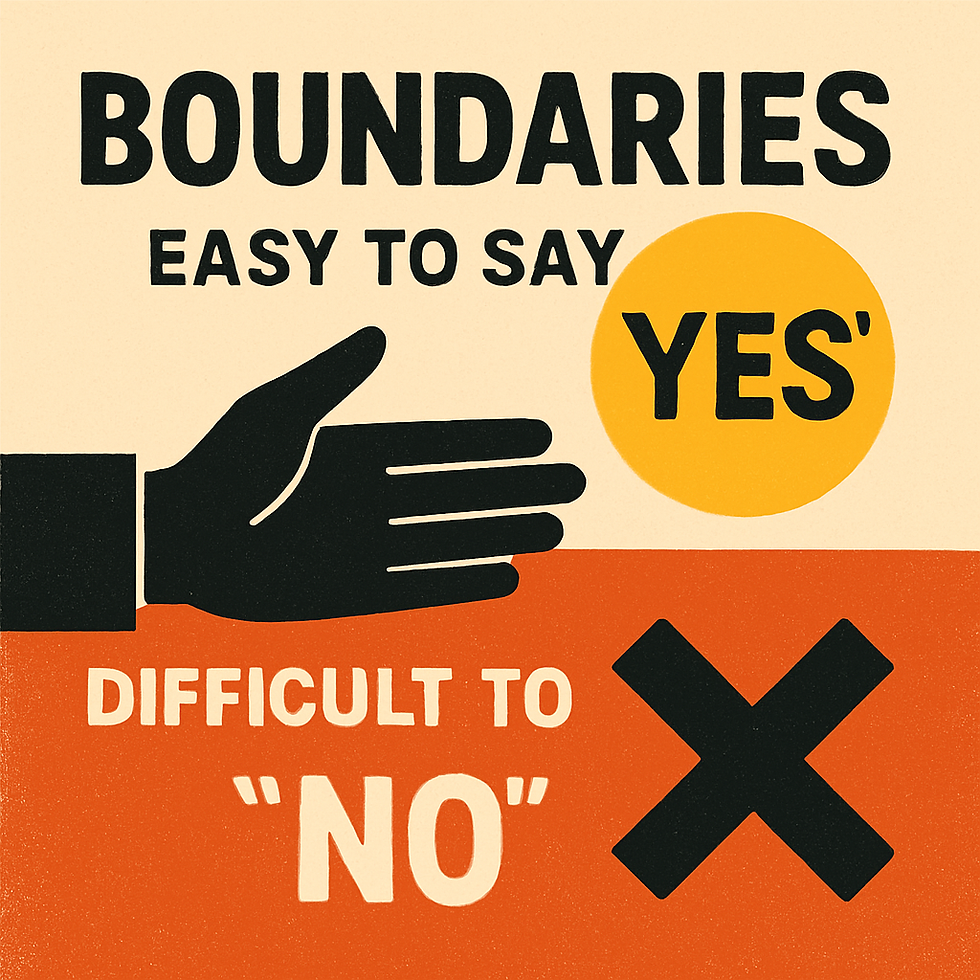
1 A Sceptical Lens
1.1 Sound Boundaries: Wondering about the tales society tells us:
Nowadays, people treat kindness like a prize. Online chats label it “trying too hard to make others happy,” yet those words miss what’s really going on. Around here, especially in the Western Cape, lots of us grew up thinking saying yes means you’re a good Christian or a good person - saying no is not Christian-like and makes you cold or selfish. But wait - a sharp eye might wonder: Who set that rule anyway? What if someone gains when we run out of energy?
Note: Cultural cues push you to do more - agreeing when your body’s screaming stop. These ideas sink in way before you grow up.
2 A Scientific Lens
2.1 Studies show how pressure affects feelings, plus the way we’re taught to act around others:
Research shows that refusing things can trigger your body's warning mode. When people push back, the amygdala - part of the brain - acts like there’s real harm nearby. This sparks the HPA pathway (Hypothalamic–Pituitary–Adrenal axis, which is a communication loop between three key structures) to dump cortisol into the blood. Pulse starts racing. Shoulders or neck may stiffen up.
This holds real weight if you’ve ever faced backlash, felt embarrassed, or carried blame just for drawing a line when you needed to.
Other research reveals that kids figure out how to ignore their upset feelings, so things stay calm around them.
Adults who’ve grown up around tension tend to keep the peace instead of speaking their truth.
The nervous system might see saying no as a threat to staying safe or fitting in.
Note: Your difficulty comes from your body's chemistry - so it’s not about weakness or blame.
3 A Practical / Therapeutic Lens
3.1 What real clients in Kleinmond and the Overstrand reveal:
In every therapy room - also during hypnosis - or even in wellness routines, you see the same thing repeatedly.
Some people agree right away - just to dodge arguments because they’re scared of letdowns, not tiredness. They start seeing themselves as someone who’s always there to lend a hand. They were raised believing limits cause friction instead of understanding.
Some people have faced heat after refusing something - anger, silence, or shame. That sticks in their body’s memory.
Cross-cultural customs see borders not as walls, yet as a fair connection - mixing personal worth with concern for people around. Because your strength stays guarded, giving from you keeps going without burning out.
Why We Default to Yes:
Fear drives the reflexive yes:
Fear of making others unhappy
Fear of disagreement
Fear of coming off as hard to deal with
Fear of drifting apart
Fear shaped from old feelings that stuck around - formed back when emotions ran high.
Note: These reactions help you survive - they’re not about who you are.
3.2 How to Begin Saying No Without Guilt
Take it slow. Changing how people connect isn't about pushing - stick with it instead.
Small no’s first.
Turn down a small thing to feel surer.
Take a pause.
Instead of automatic yes, try: “Let me think about it and get back to you.”
Short, neutral refusals.
“I’m not able to commit to that right now.”
Keep in mind, your power doesn't last forever.
Boundaries guard your feelings, keep you physically well, and also clear-minded.
Pay attention to what your body tells you.
Your nervous system usually shows what's real way before your brain talks you out of it.
3.3 Local Application: Why This Matters in Kleinmond and the Overstrand
Neighbours here tend to stick together. People recognise each other, kinship ties tangle across homes, yet turning someone down might stir tension since bonds run deeper. A silent weight pushes some to dodge discomfort just to stay on good terms.
Yet clear limits boost how we feel inside, connect with others, or understand who we are. These lines help us be real - without feeling drained, bitter, or swamped.
3.3.1How Hypnotherapy Supports Boundary-Setting
Hypnotherapy changes hidden habits behind always trying to please others or dodge arguments. Because it targets core beliefs, old feelings stuck in memory, also automatic reactions shaped by past experiences.
A globally recognised hypnosis practitioner, trained and verified - focusing on:
Smoking cessation
Parts Therapy
Analytical Regression
Hypno-med uses Esdaile’s method along with catatonic state techniques
Trauma-informed approaches
Stress reduction
Boundaries help, along with managing feelings
I guide people in changing deep habits where saying NO feels risky. Through guided hypnosis, clients can:
Let go of past regrets
Work through lingering blame cycles.
Calms your nerves
Rebuild your inner go-ahead
Shift identity from “people-pleaser” to “self-leader”
Set your heart limits calmly yet firmly
Hypnotherapy opens a strong route to lasting shifts in how you feel and act - perfect if reasoning, reading, or chatting hasn't fully helped so far.
3.4 A Final, Integrative Insight
Saying NO isn't running away. “Sure” doesn't always care.
Each is a choice - healthier - once the mind, nerves, and emotions settle into safety. These shifts happen not by force, but through gentle signals of trust. When inner tension eases, better decisions come naturally. Safety opens space for clarity, making room for real change. Without it, even smart picks can feel out of reach. Once you can truly say yes or no again, everything opens.


Comments